
What 450+ Conversations with Founders Taught Me
About What Actually Works in 2026
The patterns I'm seeing aren't what anyone predicted
My calendar has been wild this year. Over 450 conversations with founders in 2025. Some struggling with their first hire. Others navigating Series A. A few post-Series B finally admitting their back office was a mess.
Here's what struck me: Nobody's asking the questions I expected.
The tech blogs predicted one thing. My actual conversations with SaaS founders and tech companies? Completely different reality. Everyone said founders would automate everything with AI automation. Instead, you're asking: "Dawn, how do I use AI automation for startups without losing my mind?"
So let me share what I'm actually seeing. Not predictions. Just the 15 patterns showing up over and over in conversations about scaling startup operations.
Where to Start (Because Everyone Asks)
Five moves that actually work for accounting for startups and workflow optimization:
1. Write Down How Your Business Actually Works
Documentation sounds boring. But without it, every new hire guesses and every process change creates chaos. Startups crushing it with business automation mapped their processes first.
Try this: Pick your team's most time-consuming task. Document every step.
2. Get Your Books Investor-Ready Now
I've seen this too many times. Founders think they'll fix their chart of accounts setup "when we raise." Then investor talks start and your startup accounting is a disaster. Clean accounting for tech startups matters before you think it does.
Try this: Schedule monthly account reconciliations. Catches problems while they're small.
3. Five Connected Tools Beat Twenty
Soon you've got 20 systems that don't talk, and someone's manually copying data. System integration gets you hours back each week.
Try this: List every tool. Mark which don't connect. Those are your problems.
4. Automate Boring Stuff, Keep Humans for Important Stuff
AI automation does well: repetitive tasks, document processing, email automation. Does terribly: strategic decisions, reading between lines, knowing when something feels off.
Try this: Track time for one week. Find the most repetitive task. That's your workflow automation pilot.
5. Train First, Buy Later
Yesterday a founder complained their team "wasn't using tools right." Training done? "We sent them the login." That's not training. I've seen 40% better team productivity just by teaching teams the tools they already had.
Try this: Have someone teach your most-used tool in 30 minutes. Record it.
What I'm Seeing in Every Conversation
The Partnership Question (87% Ask This)
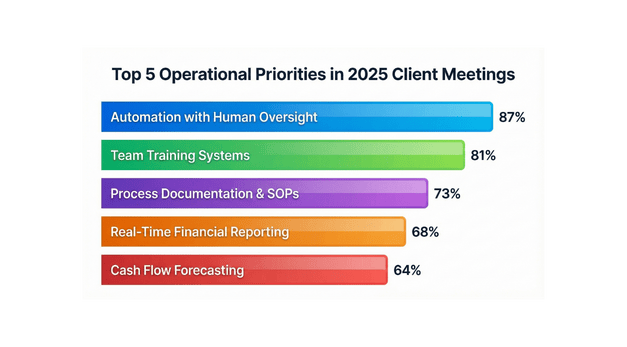
"Dawn, how do we automate without giving up control?" This showed up in 87% of my 2025 talks. Not "should we automate?" You know you need to. But "how do we do this without waking up one day with no idea what our systems are doing?"
Founders figuring this out use automation tools to handle routine decisions so teams focus on exceptions, strategy, relationships. Sarah runs a SaaS startup doing $8M ARR. She told me: "I don't want AI making decisions for me. I want it making decisions with me." That's the mindset shift.
The AI Reality Check
In 2025, the question changed to: "How do we use AI automation for startups in a way that actually helps?" Winning startups fix workflows first. Clean up the mess. Then layer in AI-powered integrations. One healthcare tech founder spent three months just optimizing workflow before touching AI. Best decision they made.
The Document Everything Movement
In 73% of meetings, founders put process documentation higher than buying software. Why? You can't scale what you can't explain. Startups building comprehensive documentation using startup accounting best practices scale consistently.
The Systems First Realization
You Can't Hire Your Way Out of Broken Systems
"We're not hiring more people until our systems can handle more people." I heard this in 68% of talks about scaling startup operations. Adding people to broken systems creates expensive chaos. You're building scalable foundations with flexible systems first.
When Your Books Become Your Edge
I watched a founder close their Series A three weeks early. Why? Their startup accounting services had them ready from day one. The investor said: "Most companies take weeks to answer our questions. You had everything ready."
Clean accounting for SaaS startups isn't just compliance. It's making faster decisions and reporting to investors with confidence.
The Real-Time Money Revelation
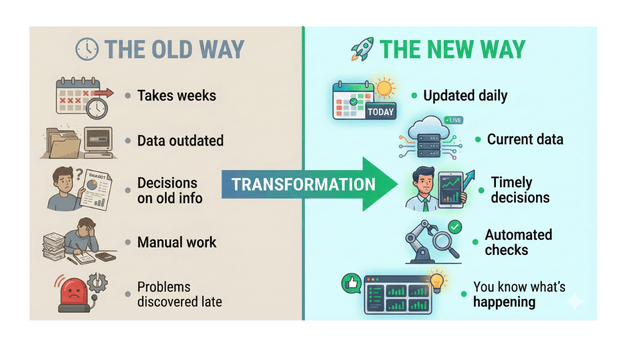
Month-end closes taking weeks? That's becoming a dealbreaker. Founders winning can see yesterday's numbers this morning through Xero accounting services. Marcus runs ecommerce: "When I can see yesterday's numbers this morning, I make better decisions today."
The Tool Stack Reality
Less is More (When Connected)
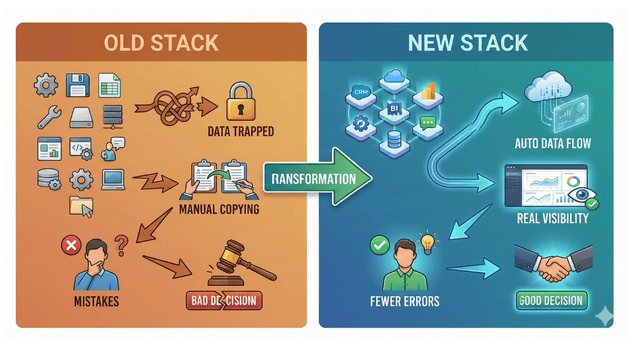
Founders stopped asking "What automation tools should we add?" and started asking "How do we make what we have work together?" Companies with 5-7 platforms that integrate well crush companies with 15-20 disconnected tools. System integration pays for itself fast.
The Training Win
In 81% of training talks, founders said teaching teams to use existing tools better delivered more value than buying new software. One operations director: "We stopped buying tools. Just taught our team what our platforms could do. Team productivity jumped 40%. Didn't spend a dollar on new software."
When Cash Flow Becomes Strategic
Your money approach changed from "How much now?" to "How much in three months?" Startups building solid forecasting make better hiring decisions and handle market uncertainty with confidence. This separates successful businesses from ones that run out of runway.
Quality and Relationships
Dashboards That Tell You What to Do
Beautiful dashboards are table stakes. The edge? Dashboards answering: What happened? Why? What should we do? If yours can't answer all three, it's just pictures.
Managing Change Well
Founders who scaled smoothly managed change systematically. They built systems helping teams adapt fast without losing productivity. Chaos during growth isn't inevitable. It's optional.
Automation That Frees Your Team
When you implement Ramp accounting automation to automate reconciliation, you get weeks back and catch errors in real time. Meeting automation and Slack automation follow the same pattern. Boring repetitive stuff gets handled. Teams focus on conversations that matter.
Cross-Training Insurance
What happens when the only person who knows your startup accounting software is gone? You're building cross-training systems creating backup without losing expertise.
Breaking Down Silos
You're connecting departments that used to work alone. Through workflow automation consulting and connected workflows, marketing, sales, operations, finance function as one system. When that happens, everything moves faster.
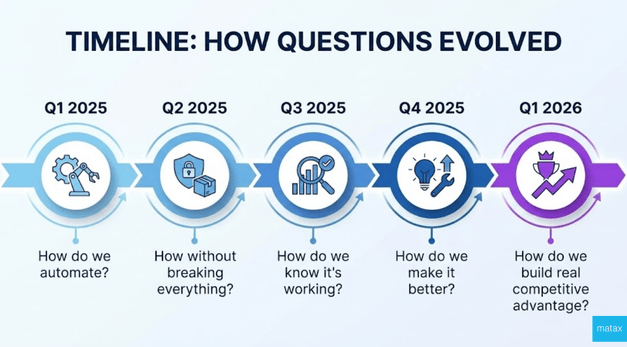
What January's Calendar Tells Me
I'm booking January 2026 meetings now. Conversations are evolving fast. Your business automation questions shift from "how to set up" to "how well is this performing?" Process documentation becomes process optimization. Financial reporting becomes strategic planning.
Founders who built foundations in 2025 enter 2026 asking sophisticated questions about acceleration. They're not keeping up. They're creating changes others will copy.
The Numbers You Need
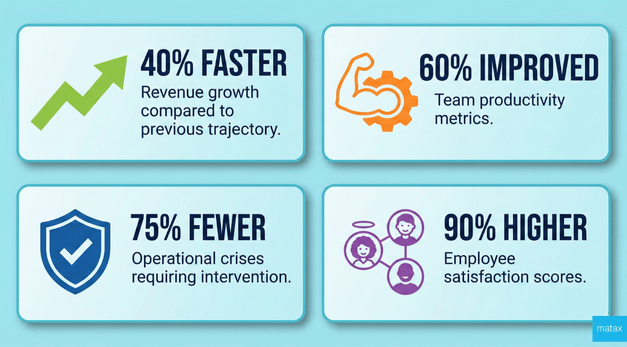
Here's what I've tracked with founders who took these seriously:
Revenue growth moving 40% faster than previous trajectory. Team productivity up 60%. Operational crises down 75%. Team happiness up 90%.
But here's what matters more: These weren't just tech projects. They were transformations in how startups operate using workflow optimization and AI-powered integrations. The technology was the tool, not the transformation.
Founders treating this like a checklist struggled. Founders seeing these as connected systems built successful businesses that scale.
Where You Stand
Companies winning in 2026 are building these capabilities now. Their competitors are still debating whether they need them.
Where does your business stand? Are you building systems or collecting tools? Training your team or hoping they figure it out? Using startup accounting services that position you for growth, or planning to "fix that later"?
Because later becomes "we wish we'd done this six months ago."
I'd love to walk through where you are and which of these 15 trends would make the biggest difference right now. Not all of them. Just the 2-3 that would unlock your next level of growth.
That's the conversation I'm having with founders every day. The ones winning aren't doing everything. They're doing the right things in the right order.
Want to figure out what that looks like for your business?
Let's Talk
I've had 450+ conversations in 2025. Each one teaches me something about what actually works when scaling.
Whether you need startup accounting services, implementing AI automation the right way, or connecting systems so they talk to each other, we've worked with hundreds of SaaS startups and tech companies going through exactly what you're going through.
About MATAX: We're a startup accounting firm specializing in tech companies and SaaS startups from seed stage accounting through Series A and beyond. We combine startup accounting services with AI automation and system integration to transform back office operations into competitive advantages.
About Dawn Hatch: Founding Partner/CEO of MATAX, winner of Xero's 2025 Advisory Innovator of the Year Award for AI workflow automation and business process automation work with startups. I've had 450+ conversations with founders in 2025 about what actually works when scaling. Every conversation teaches me something about the gap between what vendors promise and what successful businesses need.
FAQ: The Technical Stuff, Explained Simply
What is workflow optimization?
Making your work processes faster and better by finding and fixing slow steps. Like finding a better route to work.
What does AI-powered integration mean?
Using AI to connect your software programs so they work together automatically. Instead of manually copying data, AI does it without mistakes.
What is accrual accounting?
Tracking money that records income when you earn it and expenses when you owe them, not when cash moves. Gives clearer financial health. Investors expect this.
What is GAAP accounting?
Generally Accepted Accounting Principles - standard rules for US accounting. Following GAAP means investors and banks trust your reports.
What is Series A funding?
First major venture capital round after proving your business model. Typically $2M to $15M with detailed financial scrutiny.
What does SaaS mean?
Software as a Service - customers pay subscription to use your software. Like Netflix for movies, but for business tools.
What is business process automation?
Using technology to do repetitive tasks automatically. Like automatic invoice sending instead of manual work each time.
What is system integration?
Making different software tools work together and share data automatically. Saves time and prevents errors.
What is document processing automation?
Using AI to automatically read, sort, and file documents. AI can read invoices, pull numbers, enter them into accounting without human help.
What is cash flow forecasting?
Predicting money coming in and going out over time. Helps plan expenses, know when you might run low, make smarter decisions.
What is revenue recognition?
The accounting rule for when you officially count money as earned. Example: $12,000 paid upfront for annual service = recognize $1,000 monthly.
What are reconciliation processes?
Checking your records match reality. Making sure bank account matches accounting software. Catches errors before they're expensive.
What is a chart of accounts?
Organized list of categories where you track money. Your financial filing system with folders like "Office Supplies," "Payroll," "Sales Revenue."
What is operational efficiency?
Getting more results with less effort, time, or money. Doing things the smartest way by removing waste and fixing slow processes.
What are back office operations?
Behind-the-scenes tasks keeping business running but not directly making sales. Includes accounting, HR, IT, admin work.
What is workflow automation?
Using software to handle task series automatically. Customer signs up → system sends welcome email, creates account, notifies team automatically.
What is email automation?
Sending emails automatically based on triggers. Welcome when someone subscribes, payment reminder before bill due.
What is meeting automation?
Using software to schedule meetings, send reminders, take notes, follow up automatically. Handles admin so you focus on conversation.
What is Slack automation?
Using bots and integrations to handle routine Slack communication. Auto-posting sales updates, getting task reminders.
What are flexible systems?
Software and processes that grow and change with your business. Instead of needing overhaul when scaling, they adapt easily.
What is integration ROI?
Return on Investment from connecting software tools. Compares time and money spent on integration vs. time saved and errors prevented.
What is a no-code integration solution?
Tools connecting software without programming code. Platforms like Zapier use simple visual interfaces.
What is cross-training?
Teaching team members each other's jobs. Creates backup coverage so business doesn't stop when someone's out.
What is Xero?
Cloud accounting software for small/medium businesses. Handles invoicing, bank reconciliation, inventory, reporting. Easy to use, integrates well.
What is Ramp?
Corporate card and spend management platform controlling spending and automating accounting. Auto-categorizes expenses, enforces limits, integrates with accounting software.